Showing posts with label anti-racist. Show all posts

Thursday, February 16, 2017

Maya Angelou

Have you ever had a passion to make a difference in the world? To make a difference for yourself? Or to make a difference for everyone who is similar to you? There are countless number of symbols I can think of that have been an example of this throughout history. After all the world continues to change every day. The person whom I would like to talk to you about is a strong black female figure by the name of Maya Angelou. She was an author, poet, singer, and civil rights activist. She worked alongside Dr. Martin Luther King Jr. and Malcolm X, two of the most notorious civil rights activists known in U.S history.
During a time where women were well into practicing their civil rights in America. There was a group of African Americans who were willing to fight for their rights, not to different from the fight for women’s rights. Civil rights activists were willing to go the distance to fight for equality. Through whatever way they could. Through words, speech, or even creative expression.
 Marguerite Johnson was Maya’s original name. She was born St. Louis Missouri on April 4th 1928.[1] When she was sixteen she dropped out of high school to pursue a life as a single mother of her only son Guy Johnson. In the Late 1950s she became increasingly committed to her writing skills and joined a group in New York City called the Harlem Writing Guild. It was a group made up entirely of African American Civil right activists. “So say the Asian, the Hispanic, the Jew, the African, the Native American, the Sioux, the Catholic, the Muslim, the French, the Greek, the Irish, the Rabbi, the Priest, the Sheik, the Gay, the straight, the preacher, the privileged, the homeless, the teacher. They hear. They all hear. The speaking of the tree.”[3](Maya Angelou). This line is from her poems titled On the Pulse of the Morning. It’s meant to represent equality and how we are all the same.
She worked closely with Dr. Martin Luther King Jr. He asked her to coordinate the Southern Christian Leadership Conference. The SCLC is a Civil Rights organization completely made up of African Americans that is still around today[2]. Unfortunately MLK was killed on April 4th 1968, Maya’s birthday. She found comfort in her writing and she wrote one of her most famous autobiographies I Know Why the Cage Bird Sings. A book about her childhood from parents’ divorce to her siblings bond with her. “Words mean more than what is set down on paper. It takes the human voice to infuse them with shades of deeper meaning.” [1] I chose this quote from the book because I it reflects on a women’s write to have a voice and that if we don’t speak up no one will understand or listen.
Maya Angelou opened up many fields for women today. She was incredibly successful in living the life she lived. Being an author, producer, singer, actress, poet, and civil rights activist. She was a very passionate individual that expressed herself in a variety of ways that made it ok for us to follow in her footsteps. It was very unusual to see a black female back then do what she did. She is an inspiration.

Maya Angelou Receiving the Medal of Freedom from President Barack Obama in 2011


 Citation:
Photo: https://upload.wikimedia.org/wikipedia/commons/d/da/Angelou_Obama.jpg  
1.    Angelou, Maya. I know why the caged bird sings. New York: Random House, n.d. Print.
2.    "Maya Angelou Timeline." Maya Angelou Timeline. N.p., n.d. Web. 8 Feb. 2017. <http://www.datesandevents.org/people-timelines/19-maya-angelou-timeline.htm>.
3.    "Maya Angelou." Academy of Achievement. N.p., n.d. Web. 9 Feb. 2017. <http://www.achievement.org/achiever/maya-angelou/>.
4.    Angelou, Maya. On the pulse of morning. New York: Random House, 1993. Print.
5.    About Us." Southern Christian Leadership Conference. N.p., n.d. Web. 8 Feb. 2017. <http://nationalsclc.org/about-us/>.


[1] Angelou, Maya. I know why the caged bird sings. New York: Random House, n.d. Print.
 [2] "About Us." Southern Christian Leadership Conference. N.p., n.d. Web. 8 Feb. 2017. <http://nationalsclc.org/about-us/>.
 [3] Angelou, Maya. On the pulse of morning. New York: Random House, 1993. Print.

Tuesday, February 14, 2017

The Grimké Sisters

The Sisterhood: Shall women's voices be hushed?

It’s not a myth that throughout history women have been silenced when fighting for their rights as well as striving for equality. From the first female voice in congress[1], Jeannette Rankin to our own Senator Elizabeth Warren, a legacy of women, past and present time, did not just give up when experiencing times of gender oppression[2] and inequality -instead, they fought back with grace and wisdom. The sisters, Sarah Moore Grimké (1792–1873) and Angelina Emily Grimké (1805–1879) were both, literally and figurately, a great representation of this kind of sisterhood. In their sisterhood of inclusion, these sisters proved us what would happen when unifying our voices against hate, bigotry, and oppression, which led to great outcomes along the way.

Having a sister who would not only share your blood but also your ideas and passion, as well as encourage you to achieve your goals, is like finding a gold mine. The Grimké sisters were different in style but similar by heart. Daughters of a wealthy family in Charleston, South Carolina. Their parents were John Faucheraud Grimké, who was a lieutenant colonel in the Revolutionary War and speaker in the South Carolina House of Representatives before becoming the chief judge of the Supreme Court[3] of South Carolina, and Mary Smith, both plantation and slave owners.

In 1837, in our dear city of Lowell, Sarah and Angelina spoke against slavery in front of 1,500 people; although, they often were heavily criticized for “having the audacity to speak to promiscuous meetings of men and women together” (National Women's History Museum[4]).

The abolitionists and women’s rights advocates, Sarah, and Angelina Grimké has shown us that two voices are stronger than one. That having allies -just like a sisterhood- would be a better approach to gender and race inequality, while fighting for our rights and for those who cannot be heard -yet


🙋Facts About Sarah

“Our powers of mind have been crushed, as far as man could do it, our sense of morality has been impaired by his interpretation of our duties; but nowhere does God say that he made any distinction between us, as moral and intelligent beings


-Sarah Grimké. Letter III: The Pastoral Letter of the General Association of Congregational Ministers of Massachusetts. Haverhill, 1837
 
Sarah Moore Grimké 1792 to 1873. Image. Retrieved from the Library of Congress, <https://www.loc.gov/item/2003653378/>.


🎂 Birthday: November 26, 1792 (1873). 
  • Sarah was the sixth child and the second daughter out of the 14 brothers and sisters in total. She was 13 years older than Angelina.
  • In 1817, when Sarah was 26, her father was seriously ill. They moved to Philadelphia, where she served as his nurse. She also wasn’t the typical female for her era -her goals were to help women and slaves, even before thinking about marriage. She even turned down two marriage proposals![10] Nevertheless, her motherly side was reflected when helping to raise Angelina’s children just like she did in the past after taking responsibility of Angelina[11] when they were younger.
  • Sarah believed that education is the key[13] for preparing women for the equality, as she advocated for women’s educational and reproductive rights, their financial freedom, and claimed that women were in a position of slavery for being unable to refuse sex to her husband -what she called “legal prostitutes, a chattel personal, a tool that is used, a mere convenience”[14].
“Men seems to feel that Marriage gives him the control of Woman’s person just as the Law gives him the control of her property” (Sarah Grimké).

⚜ Sarah died on December 23, 1873; no information about the reasons was found.


🙋Facts about Angelina

“Will you behold unheeding, life's holiest feelings crushed, where woman's heart is bleeding, Shall woman's voice be hushed?" 
-Angelina Emily Grimké. Appeal to Christian Women of the South [15]. New York: American Anti-Slavery Society, 1836
Angelina Emily Grimké 1805 to 1879. Image. Retrieved from the Library of Congress, <https://www.loc.gov/item/2003653379/>.


🎂 Birthday: February 20, 1805 (1879).
  • In 1835, distressed by violent riots against abolitionists and African Americans in New York and Philadelphia, Angelina wrote a letter in response to William Lloyd Garrison who, without her consent, published her letter on The Liberator[18]. The letter led her into a storm in her hometown and with her family, especially among the Quaker society who openly condemned any radical activism[19] -they even wanted for her to retract the letter[20], but she kept her voice intact.
“Her writing drew the ire of southerners who opposed its abolitionist message and northerners who felt that women had no business writing or speaking about something as controversial as slavery (National Park Service[21]).
  • Angelina gave a one-hour speech in Philadelphia Hall[22] before a group that included around 3,000 women and men. During a time that women’s voices were social condemned if heard in public, especially about the issues on slavery and gender inequality, a mob attacked the building during Angelina’s speech; and the building was burned the next day. Fortunately, there were not victims reported.
  • At the age of 33, in 1838, she married Theodore Weld, an antislavery advocate[23] in the pre-Civil War period. A year later, Weld and the Grimké sisters published American slavery as it is: Testimony of a thousand witnesses, which was “designed to portray the horrors of American Slavery through a collection of first-hand testimonials and personal narratives from both freedmen and whites” (Monique Prince[24]).
  • Angelina gave birth of three children, Charles Stuart, Theodore, and Sarah -children whom her sister took care of them as the children she never had.

⚜ Angelina died on October 26, 1879, after been paralyzed for several years due to strokes.


📽🎞Videos 

“American Experience: The Abolitionists – Angelina Grimke.” American Experience PBS. YouTube. Published on Jan 7, 2013. https://www.youtube.com/watch?v=67Swj2usumY 


“Sarah Grimke & The Feminist Tradition: Shimer College Thought Series Lecture by Louise Knight.” Shimer College. YouTube. Published on Oct 22, 2015. https://www.youtube.com/watch?v=8fIsRBgKay4

👭👭👭👭👭👭👭👭👭👭👭👭


✎🖆Footnotes References


[1] “Jeannette Rankin.” History, Art & Archives. United States House of Representatives. February 2017. http://history.house.gov/People/Listing/R/RANKIN,-Jeannette-(R000055)/
[2] Min Kin, Seung. “Senate votes to shut up Elizabeth Warren.” Politico LLC. 2 Feb. 2017. http://www.politico.com/story/2017/02/elizabeth-warren-sessions-silence-234779
[3]  “Sarah Grimké (1792—1873) and Angelina Grimké Weld (1805—1879).” Internet Encyclopedia of Philosophy. February 2017. http://www.iep.utm.edu/grimke/
[4] T., Nadia. “Angelina (1805-1879) and Sarah Grimke (1792-1873)” National Women's History Museum. 2008. https://www.nwhm.org/online-exhibits/youngandbrave/asgrimke.html
[5]  Blundell, John. “Abolitionist Sisters.” Foundation for Economic Education. May 25, 2011. https://fee.org/articles/abolitionist-sisters/
[6] “Women Lawyers and State Bar Admission.” Law Library of Congress: American Memory. The Library of Congress. https://memory.loc.gov/ammem/awhhtml/awlaw3/women_lawyers.html
[7] Lerner, Gerda. The Feminist Thought of Sarah Grimké. Oxford University Press. p6. 1998.
[8] "Act Passed by the General Assembly of the State of North Carolina at the Session of 1830—1831" (Raleigh: 1831). Retrieved from: “Slaves Are Prohibited to Read and Write by Law.” History Is a Weapon. http://www.historyisaweapon.com/defcon1/slaveprohibit.html
[9] MacLean, Maggie. “Sarah Grimke.” History of American Women. 3 March 2013. http://www.womenhistoryblog.com/2013/03/sarah-grimke.html
[10] Knight, Louise W. “About the Grimké Sisters.” Louise W. Knight. http://www.louisewknight.com/about-the-grimke-sisters.html
[11] “People & Ideas: Angelina and Sarah Grimké.” God in America. WGBH Educational Foundation. 11 October 2006. http://www.pbs.org/godinamerica/people/angelina-grimke.html
[12] Board Moran, Karen. “Grimké Sisters.” Worcester Women's History Project. 2010.  http://www.wwhp.org/Resources/Slavery/grimkesisters.html
[13] Johnson Lewis, Jone. “Sarah Grimké: The mistaken notion of the inequality of the sexes.” Women’s History. About Inc. 28 November 2016. http://womenshistory.about.com/od/racialjustice/a/Sarah-Moore-Grimkandeacute.htm
[14] Lerner, Gerda. The Grimké Sisters from South Carolina: Pioneers for Women’s Rights and Abolition. New York: Oxford University Press. P.113. 1998.
[15] Rossi, Alice. The Feminist Papers: From Adams to de Beauvoir. Northeastern University Press; Reprint edition. p299. 1988.
[16] MacLean, Maggie. “Angelina Grimke.” 31 October 2013. History of American Women. http://www.womenhistoryblog.com/2013/10/angelina-grimke.html
[17] Berkin, Carol. “Angelina and Sarah Grimke: Abolitionists Sisters.” The Gilder Lehrman Institute of American History. 2016. https://www.gilderlehrman.org/history-by-era/slavery-and-anti-slavery/essays/angelina-and-sarah-grimke-abolitionist-sisters
[18] Berkin, Carol.
[19] “Angelina Grimké.” Libertarianism. 2017. https://www.libertarianism.org/people/angelina-grimke
[20] Perry, Carolyn. The History of Southern Women's Literature (Southern Literary Studies). LSU Press. 2002. p72-73.
[21] “Grimke Sisters.” Notable Women’s Rights Leaders. National Park Service. US Department of Interior. https://www.nps.gov/wori/learn/historyculture/grimke-sisters.htm
[22] Blundell, John. “Abolitionist Sisters.” Foundation for Economic Education. May 25, 2011. https://fee.org/articles/abolitionist-sisters/
[23] “American slavery as it is: Testimony of a thousand witnesses.” Archive.Org. February 2017. https://archive.org/details/americanslaverya1839weld2
[24] Prince, Monique. “Theodore Dwight Weld, 1803-1895.” Documenting the American South. The University of North Carolina at Chapel Hill. February 2017. http://docsouth.unc.edu/neh/weld/summary.html

Irena Sendler


“He who changes one person, changes the world entire”


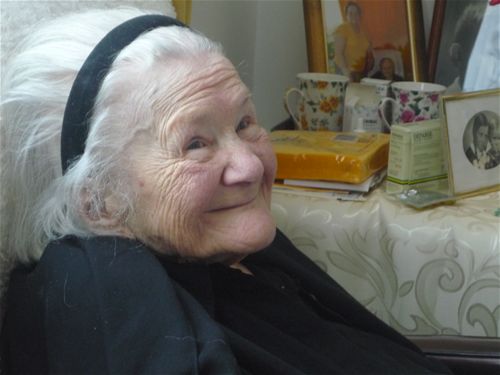
Figure 1: Photograph of Irena Sendler in Poland. Taken from: http://www.irenasendler.org/facts-about-irena/
I sat bound to a chair while being interrogated by a German Nazi. He “was young, very stylish and spoke perfect Polish… He wanted the names of the Zegota leaders, their addresses and the names of others involved.”[1] So I fed them the load of nonsense that we had prepared in case of capture. But he had a folder with evidence from people who turned me in.[2]

I had only been captured some odd days ago, around October 20th, 1943 and brought to the Pawiak Prison. The German Nazi claimed that the folder contained evidence that proved I had been helping orphan Jews in the Warsaw Ghetto. They had known me as “the woman who knocked on Jewish doors in the ghetto, [trying] to talk the mothers out of their children.”[3] Once the mothers would hand over their children, I would take them through an underground network. I smuggled the children out in ambulance stretchers, sewer pipes, body bags, and even trunks.[4]

When we reached safety, I utilized false documents from the individuals I recruited from the Centers of Social Welfare Departments. “With their help, [I] issued hundreds of false documents with foreign signatures” to thousands of my Jewish children to use as new identities.[5] They would follow me to their new homes and orphanages where they would begin their new life as a Christian. I promised my children to find their mothers and families once the war was over. I knew however, that the fate of their parents would not end well. The majority of the children’s parents would die in the Treblinka death camp.[6]

What the Nazis did not know however, where the jars were hidden, and if I had anything to do with it, they never would find out. My father had always told me “to help anybody in need.”[7] He was a doctor for some of the less wealthy Jewish families. He passed a while back from Typhus when I was 7, which he had caught from one of his patients.[8] He was a brave man and for that I knew I wanted to make a difference in the world much like he did. So I had saved the names and origins of the children on a piece of tissue paper and placed them in a jar.[9] The jars were hidden under an apple tree in one of my neighbor’s backyard.[10] But the German Nazis knew I was still holding back information, so they broke my legs and feet. I didn’t budge. The Nazis probably assumed they could get information out of a weak traditional woman living in Poland. What they did not realize is that they could break any physical part of me they wanted to, “but they would never break [my] spirit.”[11]

The following day the German Nazis issued my death sentence: I was going to be shot.[12] Following my sentence, one of the German executioners entered the room, I figured my fate was coming for me. But as I looked around I noticed he was helping me escape to safety. He told me that Zegota, the Polish Council I had worked with to save the Jewish children, had bribed him to get me out of the Pawiak Prison.[13] “On the following day the Germans Nazis loudly proclaimed [my] execution. Posters were put up all over the city with the news that [I] was shot. [I] read the posters [myself].[14]

“After the war [Irena] dug up the jars and used the notes to track down the 2,500 children she placed with adoptive families and to reunite them with relatives scattered across Europe.”[15] The majority of the children’s families had passed in the death camps that they had been saved from. “The children had known her only by her code name Jolanta. But years later, after she was honored for her wartime work, her picture appeared in a newspaper. ‘A man, a painter, telephoned me," said Sendler, "`I remember your face,' he said. `It was you who took me out of the ghetto.' I had many calls like that!”[16]


References:
"Irena Sendler." Irena Sendler. N.p., n.d. Web. 07 Feb. 2017.<http://www.auschwitz.dk/sendler.htm>.


[1] "Facts about Irena." Life in a Jar. The Irena Sendler Project, n.d. Web. 07 Feb. 2017.
[2] Ibid.
[3]  Mayer, Jack. Life in a Jar: The Irena Sendler Project. Middlebury, VT: Long Trail, 2011. Print.
[4] "Irena Sendler." Irena Sendler. N.p., n.d. Web. 07 Feb. 2017. <http://www.auschwitz.dk/sendler.htm>.
[5] Ibid.
[6] "Facts about Irena." Life in a Jar. The Irena Sendler Project, n.d. Web. 07 Feb. 2017.
[7] Harding, Louette. "Irena Sendler: We Tell You the Story of a Holocaust Heroine." Daily Mail Online. Associated Newspapers, 01 Aug. 2008. Web. 13 Feb. 2017.
[8] Ibid.
[9] Mayer, Jack. Life in a Jar: The Irena Sendler Project. Middlebury, VT: Long Trail, 2011. Print.
[10] "Irena Sendler." Irena Sendler. N.p., n.d. Web. 07 Feb. 2017. <http://www.auschwitz.dk/sendler.htm>.
[11] Ibid.
[12] Ibid.
[13] Ibid.
[14] Ibid.
[15] Ibid.
[16] Ibid.